Tuesday, March 4, 2014

Lick the Salt Habit


March is National Nutrition Month, so the timing of the WCCC Weight Loss Challenge could not be better. One of the recurring points I have made to the contestants of this Challenge is that excessive salt (sodium chloride) in the diet can negatively impact your health and weight.
Too much sodium is linked to increased risk for hypertension, stroke, cardiovascular disease, osteoporosis, stomach cancer, and kidney disease. In addition, excessive salt intake can lead to puffiness, bloating, and weight gain. Previous recommended daily allowances of sodium have recently been lowered to 1,500 mg (less than one teaspoon!) per day for children and adults. 


There are a number of ways you can reduce your salt intake to increase your weight loss efforts and improve overall health:

1.    Focus on fresh foods that are naturally low in sodium, and include them more often in meals and snacks. Wise choices include fruits, vegetables, dry beans, eggs, poultry, fish, yogurt, and brown rice.
2.    Eat highly processed and ready-to-eat foods in smaller amounts or only occasionally, as they tend to be higher in sodium.  Culprits in this group include cured meats such as bacon, sausage, hot dogs, deli/luncheon meats, canned chili, ravioli and some soups.
3.    Control the amount of salt you eat by cooking more often at home, and using little or no salt in preparation. Omit salting the water before boiling, despite cooking instructions. Be sure to drain and rinse canned vegetables with salt added.
4.    Try salt-free seasonings such as herbs, spices, garlic, vinegar, and black pepper instead of salt. Add fresh lemon juice to fish and vegetables. Combine herbs and spices to make your own salt-free seasonings. 
5.  Read the Nutrition Facts label and ingredients list to select products labeled “low sodium,” “reduced sodium,” or “no salt added.”  Recognize baking soda (sodium bicarbonate), monosodium glutamate (MSG), and sodium benzoate as salt on food labels.
6.    Condiments like ketchup, pickles, olives, salad dressing, soy sauce, and seasoning packets are high in sodium. Try low-sodium options when available, and kick soy sauce and duck sauce to the curb if you indulge in Chinese food (also high in sodium).

Sodium is an acquired taste. Lower-sodium foods may taste differently at first, but over time your taste buds will adapt to the change. It has been difficult for most of the Weight Loss Challenge contestants to adjust their daily intake of salt, especially when eating out at restaurants or enjoying take-out. But some of their favorite restaurants, such as Chili’s, Ruby Tuesday, and TGIFriday’s, have posted online nutritional information and shocked them into making some needed changes.  Remember, many restaurants will prepare your meals without salt upon request. 

It may seem like a small issue, but licking that salt habit will do more than help with weight loss. More importantly, lessening sodium intake can greatly improve your overall health. 

Wednesday, February 19, 2014

Eggplant Escapades: Nurses, Nicotine, and Nightshades

Taking a step back from the WCCC Weight Loss Challenge, enjoy an excerpt from my newly published article about eggplants in OKRA Magazine. For the full article, click here

Recommendations from this Registered Dietitian (RD):
  1. How low can you go? Eggplant is low in calories, saturated fat, cholesterol, and sodium, and considering its dietary fiber and manganese, offers a healthy and tasty option for active weight loss, weight loss management, and heart-healthy dietary needs. Be careful not to negate these benefits by adding extra cheese, oils, and other calorie-laden ingredients to your eggplant dishes!
  2. Practice meaty deception. The low calories and saturated fat in eggplant make them solid substitutes for meat in weight loss efforts (such as vegetarian lasagna). The bulk and texture of eggplant make using it as a meat substitute in vegetarian or vegan meals easy and almost imperceptible.
  3. Throw some shade. As a member of the nightshade family, eggplant may trigger sensitivities or allergies in some individuals, such as symptoms of arthritis or oral allergy syndrome, which can potentially lead to anaphylaxis if left untreated. Though studies about nightshades and such conditions have been inconclusive thus far, contact a healthcare professional if you detect similar symptoms after ingesting nightshades.
  4. Smoke ‘em if you got ‘em. The nicotine content (nicotinoid alkaloids) in the eggplant contributes to its bitterness, which prompts the wise suggestion to consumers to not eat the eggplant in raw form. To counter this, try degorging, the salting, rinsing, and draining of the eggplant to reduce bitterness. Salting your eggplant will also reduce the amount of oil absorbed from cooking.
  5. You want multi-cultural versatility? Consider dishes one can make from eggplant: ratatouille (France), moussaka (Greece), baingan bharta (North India), baba ghanoush and hummus (Middle East), and caponata (Sicily), and you will see the reflection of global diversity.
  6. Toss the cold shoulder. Because eggplants are extremely sensitive to cold, plant seedlings after the danger of frost has past (in temperate climates).  The highest quality eggplants are harvested at 2/3 their full size; avoid eggplants with hard seeds, overly bitter flesh, and duller skin. Alternatively, purchase fresh eggplants all year in your local grocery stores.

    For my full article on eggplant, click here. For a full archive of my nutrition articles in OKRA Magazine, click here

Tuesday, February 11, 2014

Rock the Weight Loss


The first Rock 106.9 WCCC Weight Loss Challenge begins this week, and I am the Registered Dietitian (RD) attempting to lead six WCCC On-Air and Promotions Staff members to healthier weights and lifestyles over the course of eight weeks. I thought this type of challenge would benefit the WCCC staff and our listeners, by showing them that small, consistent lifestyle changes can lead to big health benefits in the long run.  The six contestants have been weighed and measured, and it’s interesting to see the “competitive spirit” kicking in, especially during the bleakness of winter. (Can you say "sabotage"???) 

 
Innocently Left in the WCCC Lunch Area (Week One)

We have an even number of males and females competing, and the winner will be determined by the greatest percentage of weight lost at the final weigh-in in April. I have armed each of them with a healthy meal plan and some tips to get them going. Simple, realistic tips for weight loss and progress of the six contestants will be discussed on the air, in podcasts, and posted on the Rock 106.9 WCCC Facebook page and WCCC web site in the coming weeks by this RD. Hopefully I can successfully counter their massive cheese obsessions and soda addictions with healthier options. Stay tuned! 

For an archive of my nutrition articles for OKRA Magazine, click here

Tuesday, October 1, 2013

Stirring the Pot: Honey and Health


Photo: Wikimedia Commons
With all of the fall festivals and autumnal celebrations that occur at this time of year, I usually glory at the sight of copious pumpkin piles, the scent of apple cider, and the sound of vintage carnival rides whizzing through the chilled air. In addition to those staples, I have happily observed that honey, in its various jars and other configurations, has been in attendance at many of these events too.

There were many years before I became a Registered Dietitian (RD), where my “honey IQ” was less than impressive. A serendipitous trip to the Savannah Bee Company in Savannah, Georgia, opened my eyes and mind to that. Goodbye plastic honey bear, hello artisanal honey and honey varietals! The honey varietal (color and flavor) spectrum ranges from light and mild (such as acacia) to dark and bold (buckwheat, pumpkin blossom).

For my full article on honey for OKRA Magazine, click here

Recommendations from this Registered Dietitian (RD):

  1. Honey is mostly sugar (carbohydrate), and its sweetness is derived from the monosaccharides fructose and glucose, with sweetness level comparable to that of granulated sugar. Commercial brands of honey (the plastic honeybears) are pasteurized and blended for uniformity of taste and texture. But from the flavor and health aspects, stick to raw and unfiltered honey from a single flower source.
  2. Honey should not be given to infants under one year of age, due to the possible presence of Clostridium botulinum spores, which may lead to infant botulism. Babies under one year of age lack the gastrointestinal tract development to protect against such a threat.
  3. Crystallized or solid honey is still “good.” The honey jar can be placed in warm water until the crystals are dissolved, or the honey can be eaten in crystallized form as well. Crystallization does not change the nutritional value of honey. 
  4. Because honey primarily consists of simple sugars, for people with diabetes, it should be used sparingly or not at all. 
  5. Honey is strongly hygroscopic (it absorbs moisture from the air) and this characteristic is important in processing and storage. A shelf life of two years is common for airtight containers of honey stored at room temperature. If there is any question about the processing, packaging, or storage of your honey, toss it out. Safety first!
My full article about honey in OKRA Magazine can be found here. For a full nutrition article archive, click here.

Monday, August 12, 2013

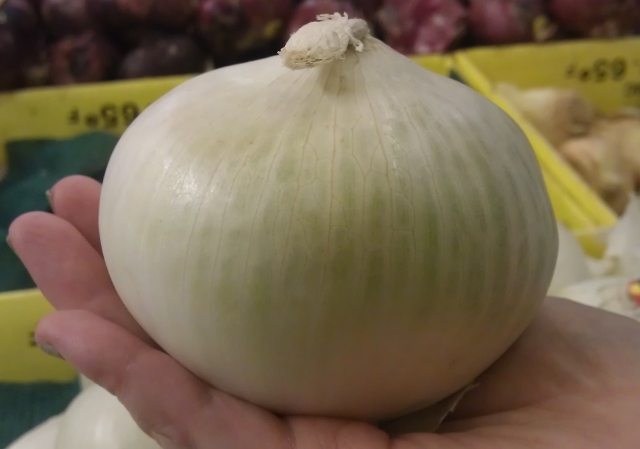
Cry Me A River: Onions and Your Health

Photo by Mireille Blacke
Think Global: White Onion

 “Life is like an onion: you peel it off one layer at a time, and sometimes you weep.”

-Carl Sandburg, American historian, poet, and novelist (1878-1967)

“What? I can’t have layers?”

-Cordelia Chase, “Buffy the Vampire Slayer,” Season 3, Episode 6 (1998)

Back in the late fall, my cousin Marcia emailed me to confirm or deny a rampant belief that leftover onions were toxic and/or poisonous. (You may have seen the email about “Ed, the chemist” that warned millions of others about the same subject.) Now that summer is in full swing and many of us are enjoying onions in our potato salad and atop our grilled burgers, this bit of food folklore seemed an appropriate topic for this column, especially since Registered Dietitians (RDs) are trained in Food Safety.

This myth about the onion and the circulated email are not based in scientific fact. Onions (raw or otherwise) are no more at risk for bacterial contamination or spoilage than any other vegetable. Therefore it is not the onion itself, but how the onion is handled that presents the food safety risk: Are your hands dirty? Are you using a dirty cutting board or knife? Those handling methods will certainly increase contamination risks, regardless of food choice.

Find my full article on onions in OKRA Magazine here.

Photo by Mireille Blacke


Recommendations from this Registered Dietitian (RD):
  1. Get layered. Caramelized onions are an optimal low-calorie flavor builder and alternative to mayo and spreads. Caramelize a red onion until it’s sweet and moist, and amp up your grilled burgers this summer. Use as a condiment and sandwich topping. No, onion rings don’t count!
  2. Safety first. As with anything we consume, the need for Food Safety is consistent across all varieties of the onion family. This need increases when we consider that the onion is almost indispensable in cooking. The onion’s sugar content makes it useful in nearly all forms of cooking: baking, broiling, boiling, roasting, braising, frying, grilling, sautéing, steaming, or eating raw. Keep your Food Safety skills up-to-date.
  3. No more tears. To reduce eye irritation during onion slicing, cut onions under running water or submerged in a basin of water. Consider refrigerating the onion before cutting to slow the enzymatic reaction rate and also reduce irritation.
  4. Table the scraps. Onions can be toxic or deadly for pets and other animals. Do not feed your pets foods or leftovers containing onions, particularly pizza, onion rings, many canned foods, or Chinese food. Be diligent about putting leftovers away promptly and not leaving them out for your pets to sneak a nibble or two.
  5. According to the Environmental Working Group, onions are one of the least-contaminated of pesticide-laden of fruits and vegetables.  With such a wide variety of onions to be enjoyed raw or cooked, it will save some pennies when you don’t have to buy organic to avoid foods heavily-sprayed with pesticides.
  6. Halitosis for health? Stronger tasting onions are associated with more superior health properties. For additional ways to excuse some of those pungent associations and more interesting information on onions, see the National Onion Association web site at http://www.onions-usa.org.
Onion lore has been rooted in both fact and fiction for centuries. Considering the onion brings tears to your eyes and also benefits your health, this contradiction makes some sense. While you can’t believe everything you read online, the onion’s health properties should not be similarly dismissed. Most people can improve their health profiles by adding raw or cooked onions to their dietary intake. Any way you slice it, that’s fine by me.

Click here for my full article on onions in OKRA Magazine. For a full nutrition article archive, click here.